In modern web converting production — whether processing tapes, films, foams, or RFID materials — every roll change traditionally means one thing: stopping the line. A manual roll change typically takes 30–60 seconds, during which the entire production line sits idle, operators are tied up with repetitive handling tasks, and material at the splice point is often wasted. Over a full shift, these seemingly small interruptions add up to significant lost output.
HOACO’s Non-Stop Unwinding System eliminates this bottleneck. By combining automatic web splicing technology with a downstream buffer (festoon) system, the line never has to stop, slow down, or wait for an operator during a roll change. The result is a true continuous, non-stop production process — higher throughput, less waste, and a safer, less repetitive job for operators.
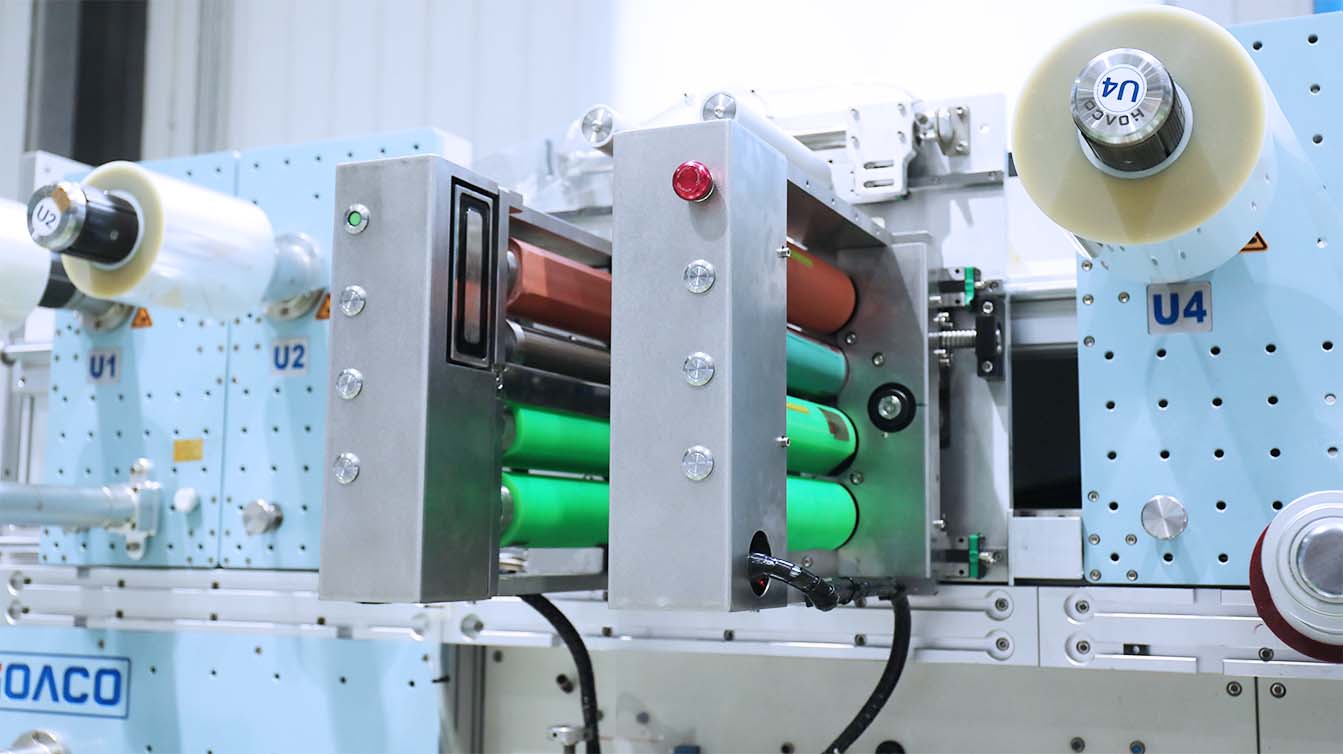
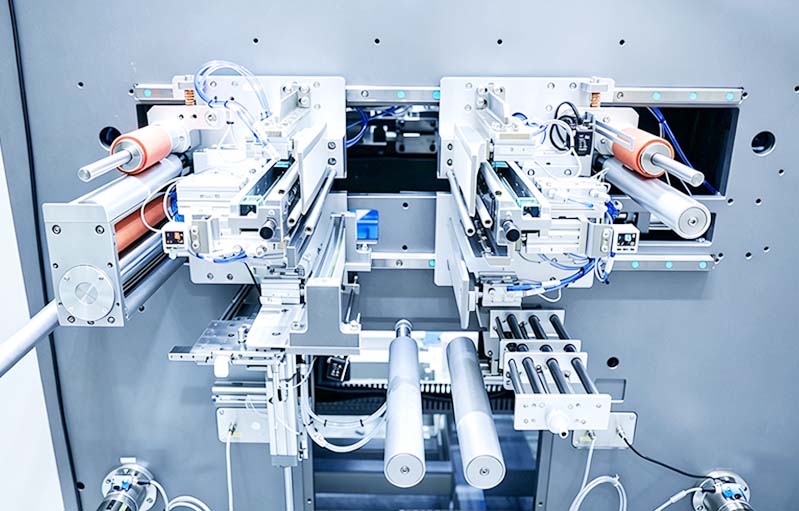
The system works on a simple but powerful principle. As the running roll nears depletion, the automatic splicing module joins the tail of the expiring roll to the leading edge of a new roll — a process known in the converting industry as “splicing.” While this splice is being formed, a buffer (festoon) system downstream continues to feed material into the process at full line speed, drawing down its stored web reserve. The entire splicing cycle takes approximately 15 seconds, during which the buffer supplies the process uninterrupted — so from the perspective of the downstream die-cutting or laminating station, production never pauses. Compared with a manual changeover of 30–60 seconds — which requires a full line stop — the automatic system reduces changeover time by more than half, and more importantly, removes the stoppage altogether. Over a full production shift with frequent roll changes, this can translate into a meaningful increase in effective run time and output.
Please note: the Non-Stop Unwinding System is available for new machine builds only and is not suitable as a retrofit/upgrade for existing equipment, as it requires the splicing and buffer modules to be integrated into the line’s original mechanical and control architecture.
The Horizontal Auto Splicing Module is engineered specifically for thick, semi-rigid roll materials — typically foam and foam-based composites up to approximately 5 mm in thickness, including 2-layer laminated structures. Because thicker materials are heavier, less flexible, and more difficult to handle at speed, the horizontal layout provides a stable, ergonomic loading position that keeps the splicing geometry consistent regardless of roll weight or diameter.
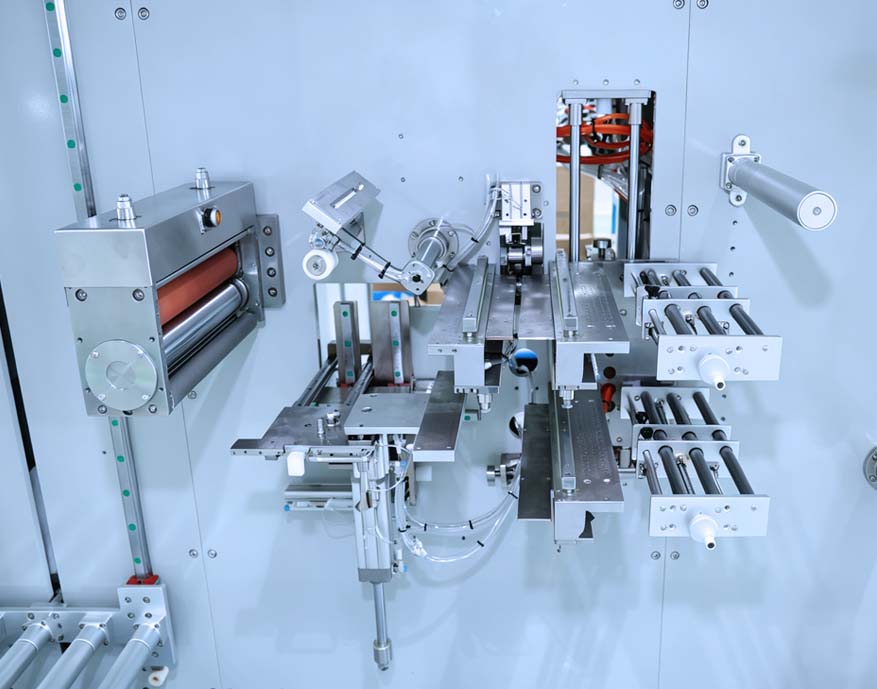
The Vertical Auto Splicing Module is designed for thin, single-layer web materials — typically films and paper below approximately 0.1 mm in thickness. Because these materials are delicate and highly sensitive to tension variation, the vertical configuration minimizes the footprint of the unwind station while allowing precise, low-tension web handling during the splice cycle. This module has already been successfully deployed in a real production line for Smith+Nephew, a leading global medical device and wound care manufacturer — demonstrating its reliability in demanding, regulated production environments.
| FEATURE | HORIZONTAL MODULE | VERTICAL MODULE |
|---|---|---|
| MATERIAL TYPE | Foam / Foam Composites | Film, Paper |
| TYPICAL THICKNESS | Up To ~5 mm | < ~0.1 mm |
| LAYER STRUCTURE | 2-Layer Laminated | Single Layer |
| LAYOUT | Horizontal, Ergonomic Loading | Vertical, Compact Footprint |
| RETROFIT AVAILABILITY | New Machines Only | New Machines Only |


Zero-speed splicing joins the new roll to the expiring roll while both are momentarily stopped, with the process fed from a buffer system — this is the approach used in HOACO's Non-Stop Unwinding System. Flying splicing, by contrast, accelerates the new roll to full line speed before joining it to the running web. Zero-speed splicing generally provides a more consistent, reliable splice and is more forgiving of variations in material and splice preparation.
No — this system requires the splicing and buffer modules to be integrated into the line's mechanical frame and control system from the design stage, so it is available for new machine builds only and cannot be retrofitted onto existing equipment.
The choice depends primarily on your material: thicker, heavier materials such as foam are generally better suited to the horizontal module, while thin films, papers, and single-layer materials are better suited to the vertical module. Our engineering team can help confirm the right configuration based on your specific material type, thickness, and roll dimensions.
A downstream buffer (festoon/accumulator) system is required so the process can continue running from stored material while the splice is being made. HOACO's engineering team designs the buffer capacity to match your line speed and splicing cycle time.
Interested in eliminating downtime on your production line? Contact HOACO’s engineering team to discuss whether the Horizontal or Vertical Auto Splicing Module is the right fit for your material and production requirements.
We understand that every production line is unique. Our engineering team works closely with you to design custom rotary die cutting solutions tailored to your specific needs: